Field Notes · European Natural Parks
Five Parks, Five Ways of Looking at Europe
The collection's first five designs travel through two great Mediterranean wetlands, a mountain range by the Cantabrian Sea, a French delta, and the Italian Alps.
These aren't static backdrops. Water, season, altitude and wind decide what lives in each place and what we'll be able to observe. These are the natural histories behind numbers 001 to 005.
The route
Water, rock and wind
Ebro Delta, Doñana, Picos de Europa, Camargue and Gran Paradiso: five protected areas united by the need to observe calmly and leave as little trace as possible.
Before you go in
How to read a park without trying to see everything
A good visit doesn't start with a species checklist, but with three questions: where's the water, which areas offer shelter, and where the air is moving. Those answers change between a delta and a mountain range, but they always help decide where to stop.
First, the edge
Shores, forest edges, and the meeting points of meadow and rock concentrate food and shelter. Scan those boundaries before searching the centre.
Then, movement
A gliding silhouette, reeds parting, or several birds looking at the same spot usually reveal more than a colour glimpsed for a second.
Finally, distance
Hides, trails and vehicles work as screens. Using them lets you watch for longer without disturbing what's happening in front of you.
001 · España
Ebro Delta: a landscape that changes with the water
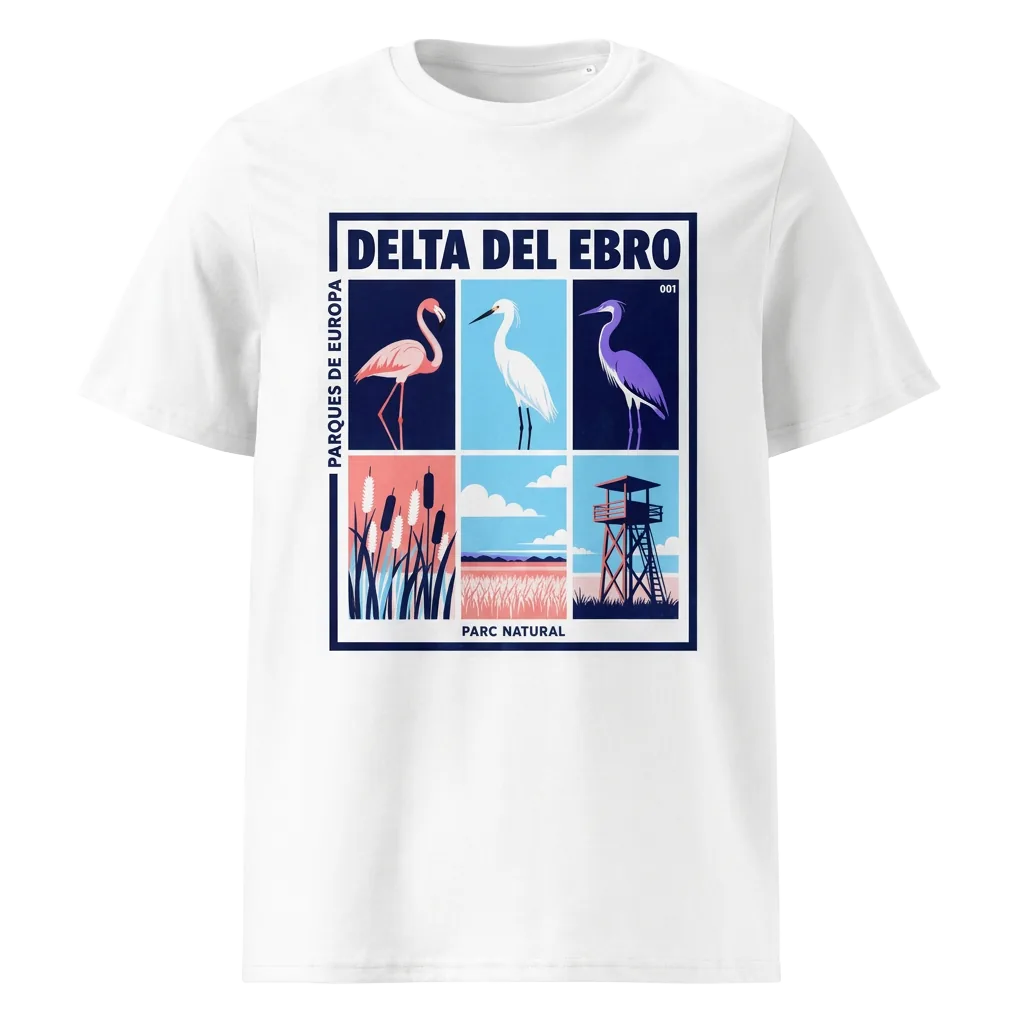
From afar, the Ebro Delta looks completely flat. The moment you stop, its layers start to appear: rice fields, lagoons, reed beds, salt pans, and a coastline that never quite settles. That mix of fresh and salt water explains why so many birds find food, rest, or a place to breed here.
Flamingos grab your attention first, but don't stop at the pink. At the edge of the reeds a purple heron may be moving, more slender and discreet, while the little egret works its way through shallow water with quick steps. An observation tower isn't just a good viewpoint — it lets you read the wetland without forcing the birds to take flight.
Here, identification improves once we stop counting colours and start comparing feeding techniques. The flamingo filters water; the egret stirs the bottom with its feet and strikes with its bill; the purple heron waits almost motionless among the stems. Three different techniques in just a few metres explain the wetland better than a rushed list of names.
Field tip: at dawn, keep the sun behind you and walk slowly along the edges between water and vegetation. That's where more activity concentrates than in the middle of an open lagoon.
- Greater flamingo
- Purple heron
- Little egret
002 · España
Doñana: living to the rhythm of a marsh
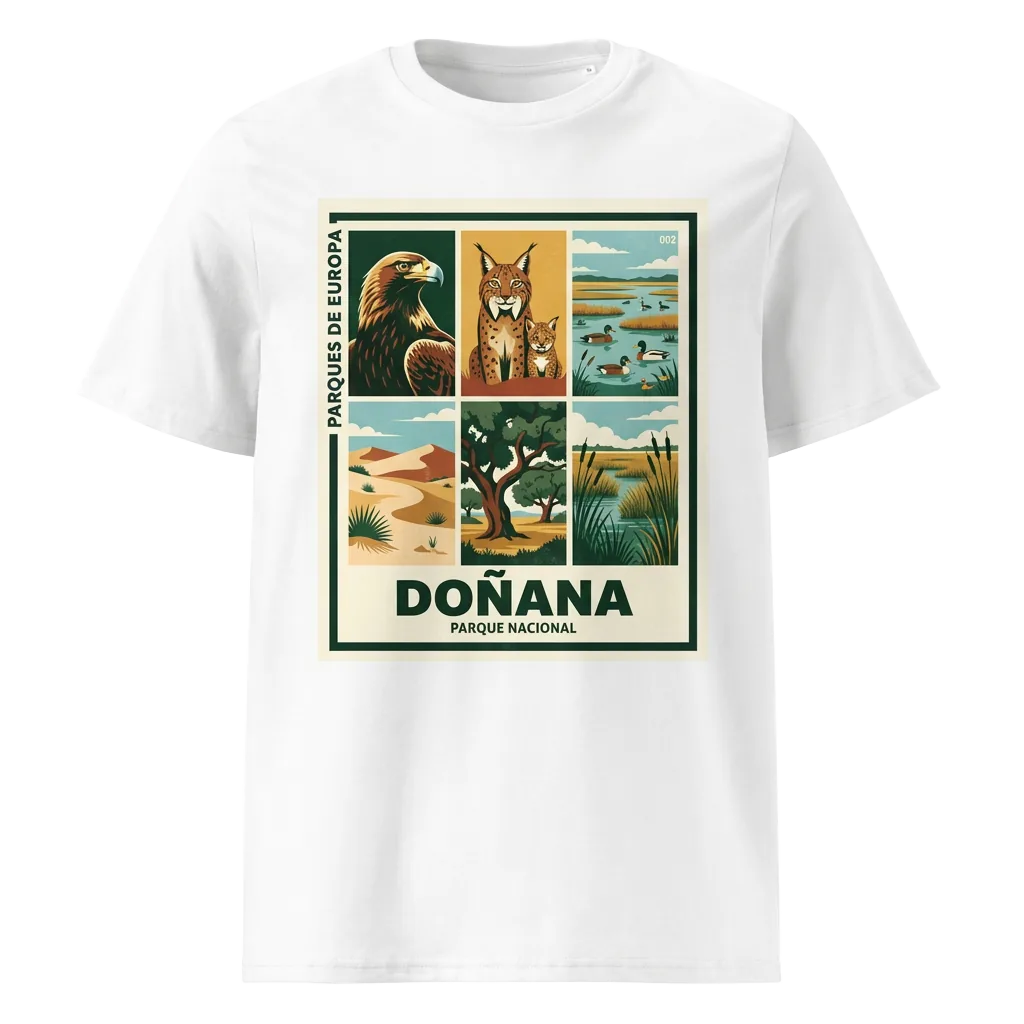
Doñana isn't a single landscape. The marsh floods, covers itself in vegetation, and dries out again; around it lie shifting dunes, pine woods, transitional scrub, and old cork oaks. Each habitat supports a different community, which is why a quick visit rarely tells the whole story.
The Spanish imperial eagle uses mature trees and open ground to hunt. The Iberian lynx, though it stars in the second design, is usually far less visible than its tracks. Searching for it at any cost is a poor strategy: it's better to understand the territory, keep your distance, and accept that some species can also be enjoyed simply by knowing they're still out there, beyond our sight.
Water levels shift the distribution of birds from one season to the next. An area that concentrates waterfowl one year might be dry the next, without the landscape losing its value. In Doñana you have to look at the whole picture: water levels, patches of vegetation, woodland edges, and flights that connect one habitat to another.
Field tip: use authorized trails and hides. Going off-trail doesn't improve the sighting and can affect breeding or resting areas that look empty from the path.
- Spanish imperial eagle
- Iberian lynx
- Marsh birds
003 · España
Picos de Europa: looking up, and also into the forest
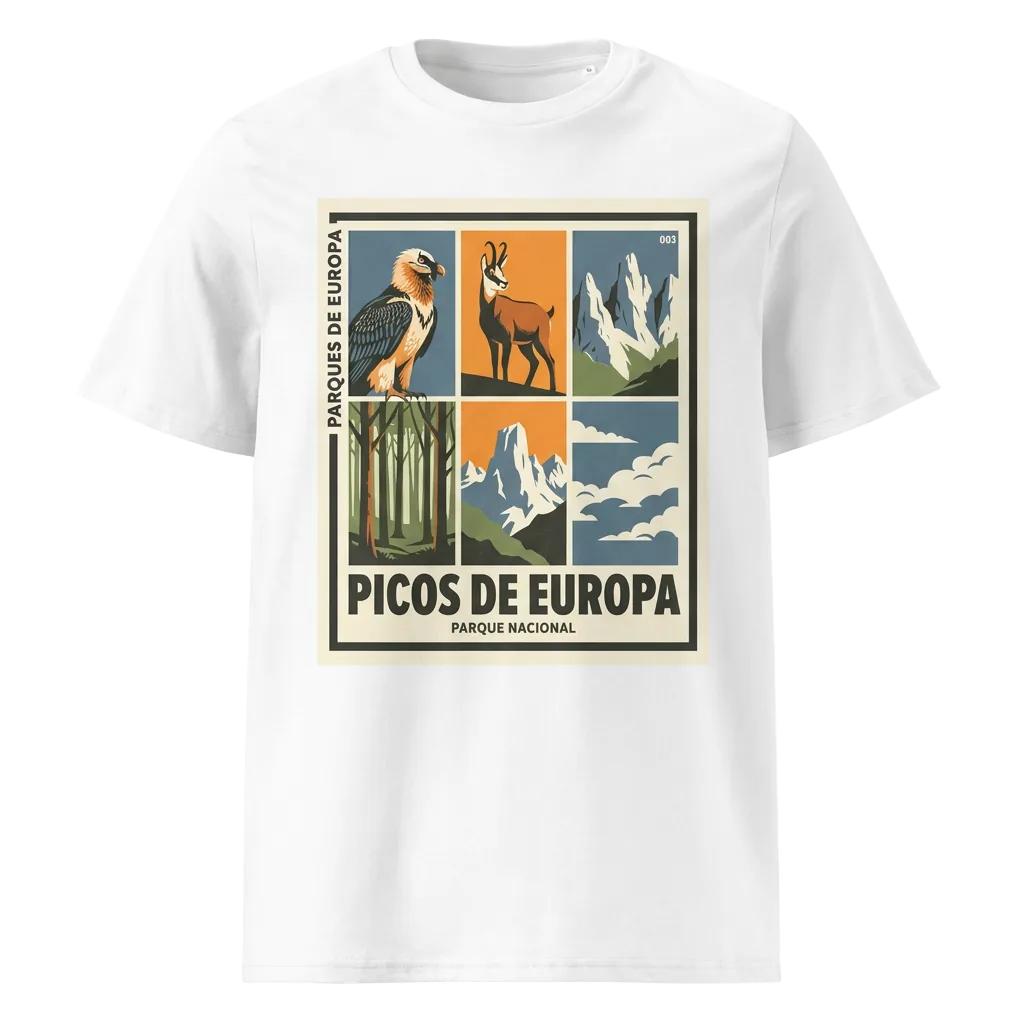
In Picos de Europa, limestone rules. The cliff faces, gullies and spires surrounding Naranjo de Bulnes seem built for looking up, where a large silhouette might turn out to be a bearded vulture. Its patient flight contrasts with the quick movement of the Cantabrian chamois across slopes that force us to think through every step.
Down below, the Atlantic beech forests completely change the scale. There's less sky and more sound: leaves, water, small birds, and branches that turn every observation into an exercise in patience. The park doesn't start at the summit; the transition between forest, pasture and rock is precisely one of its greatest riches.
Light also sets the rules. Early on, the slopes stay cold and large birds can go unnoticed. Once the sun warms the rock, updrafts appear and it's worth scanning passes and cliffs. You don't need to sweep the whole sky: picking two ridgelines and returning to them tends to work better.
Field tip: for large raptors, rest your back, scan the ridgelines unhurriedly, and check the same sector again. A motionless dot can take several minutes to reveal that it has wings.
- Bearded vulture
- Cantabrian chamois
- Forest birds
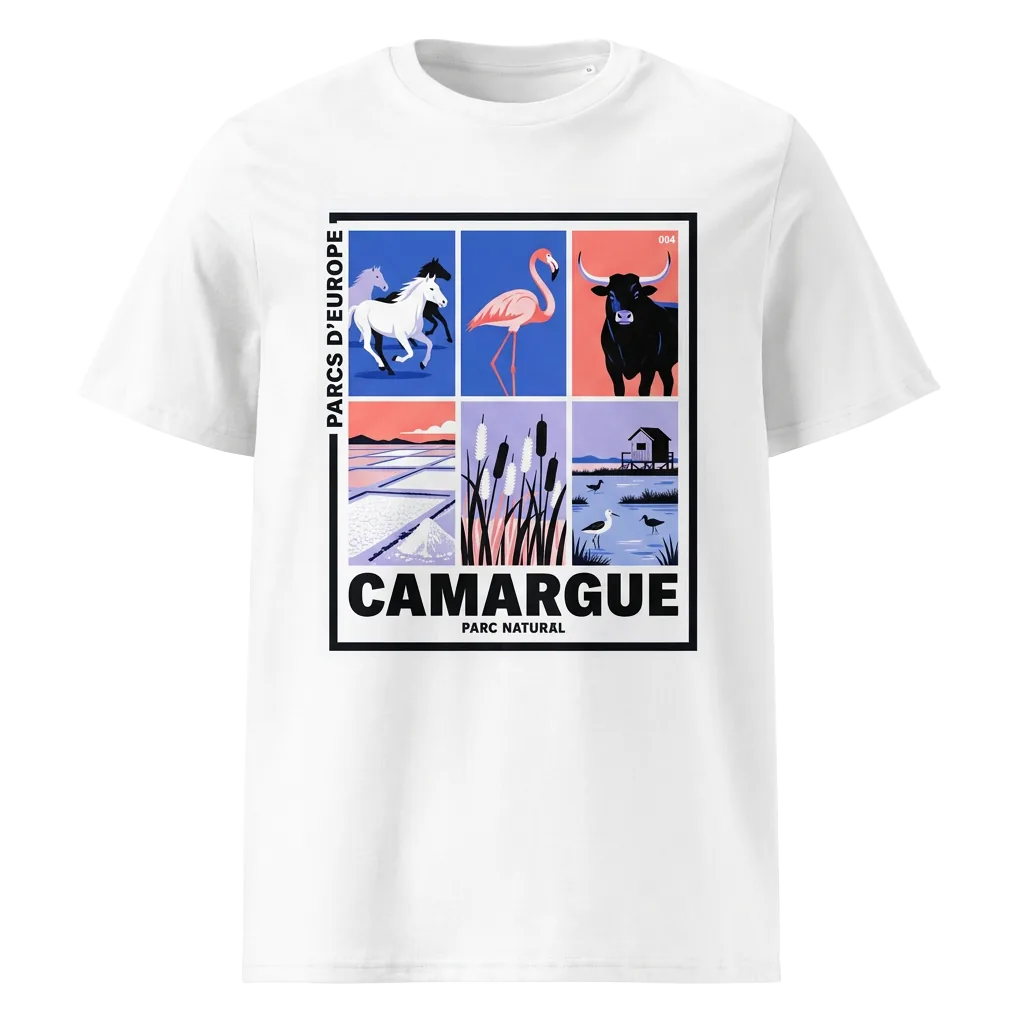
004 · Francia
Camargue: salt, wind, and legs in the water
In the Rhône delta, the Camargue mixes marshes, salt pans, lagoons and pastures. The white horses and black bulls are part of a landscape shaped as much by water as by human management. Between the two, birds take advantage of a huge pantry of invertebrates and small aquatic organisms.
Pink flamingos are the best-known image, but watching them well requires paying attention to behaviour: some filter food with their head upside down, others rest on one leg, and some turn a minor squabble into a rather flamboyant display. Wind can make binoculars tricky, though it also clears the air and concentrates birds along sheltered shores.
The salt pans teach another useful lesson: a sheet of water that looks empty can be full of small birds. It helps to divide it into strips and scan the near shore first, then the islets, and the far side last. Always starting with the distance is a pretty effective way to miss what's right in front of you.
Field tip: in strong wind, look for the sheltered edge of the lagoon. Birds tend to feed there and your scope shakes much less — everyone wins.
- Pink flamingo
- Salt-pan birds
- Camargue horse
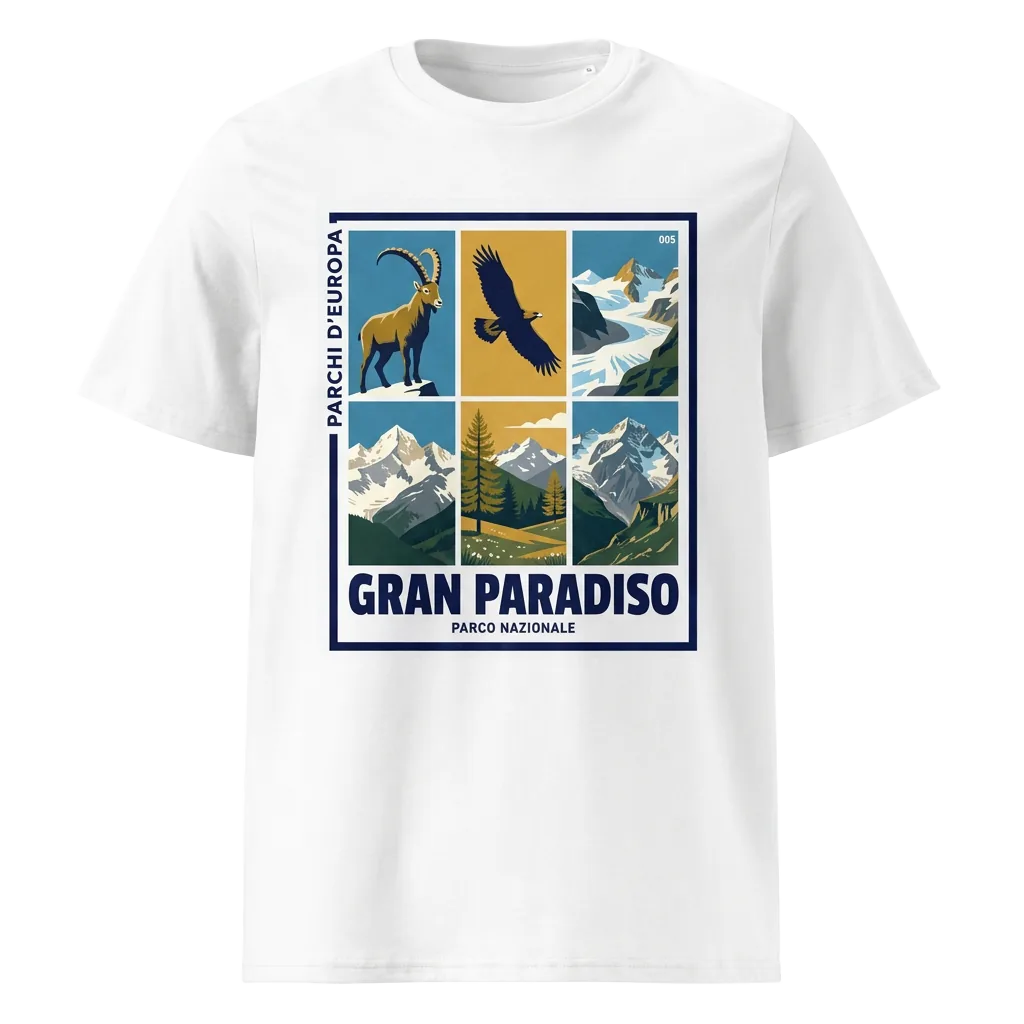
005 · Italia
Gran Paradiso: the ibex mountain
Gran Paradiso was born tied to the protection of the Alpine ibex. Today, its valleys, high-altitude meadows, larch forests and glacial peaks tell a broader story: that of species which adjust every move to very short seasons and abrupt weather changes.
Ibex tend to seek out pastures and rocky slopes; the golden eagle needs a longer, patient gaze. It's worth scanning the edge of the ridgelines rather than chasing every shadow. In high mountains, watching well also means knowing when to put the binoculars away: fog, storms or snow can turn a calm outing into something else quite quickly.
As you gain altitude, trees give way to scrub, meadow and rock. Those edges are good places to stop because they concentrate food and shelter. If a group of ibex appears, watch their direction and leave their path clear; moving ahead for a frontal photo usually just pushes the animals further away, and the photo turns out just as bad.
Field tip: bring a warm layer even with a good forecast, and watch from the trail. Approaching wildlife up a slope costs the animal energy, and yours too, usually for worse results.
- Alpine ibex
- Golden eagle
- High-mountain wildlife
Preparing the trip
Five things to check the day before
- 01 · AccessOpening hours, bookings, roads, transport and temporary closures.
- 02 · WeatherWind in wetlands; fog, storms and temperature in the mountains.
- 03 · LightChoose your route to avoid long backlit stretches in the early hours.
- 04 · RegulationsPermitted trails, sensitive zones, dogs and photography restrictions.
- 05 · Turnaround planIn high mountains, set a return time. In wetlands, have a backup plan in case the wind or water level changes on the day.
Questions before packing your bag
Which of these parks is easiest for beginner birdwatching?
Wetlands like the Ebro Delta and the Camargue offer open spaces and hides that make it easier to spot birds. Even so, it's worth checking access and conditions before travelling.
Do I need a spotting scope to visit these places?
It's not essential. Binoculars let you enjoy any of them, though a scope is useful in lagoons, marshes and salt pans where birds rest far away.
When is the best time to visit a European natural park?
It depends on the landscape and what you want to observe. Migration periods favour wetlands; in the mountains, weather and trail conditions matter more. Check up-to-date official information.
Can I get closer if an animal seems calm?
No. Staying still doesn't mean it tolerates our presence. If it repeatedly raises its head, stops feeding, or changes direction, back away.
Visiting without becoming part of the problem
Before heading out, check access, capacity limits, temporary closures and official rules. Stay on trails and hides, keep your distance from wildlife, and don't use calls. During breeding season, a photograph is never worth an abandoned nest.
To plan your visit and check species, use each site's official website, BirdLife, eBird, and local ornithological organizations. Conditions and restrictions can change.
View the European Natural Parks collection