Field Notes · Wetlands
Winter is the best season to get started
In winter, waterbirds gather in a handful of spots, sit still for longer and can be watched from a comfortable distance. Arrive with first light, enter the hide without talking, let ten minutes pass, then scan in bands: near shore, open water, island, sky.
A wetland in January can give you more species in two hours than a forest gives you all spring. And you don't need to walk — you need to stay put.
Simple plan
Dawn and a hide
Arrive before full daylight, enter quietly, wait ten minutes, then scan by distance band. No walking toward the birds.
Why are there so many birds in winter?
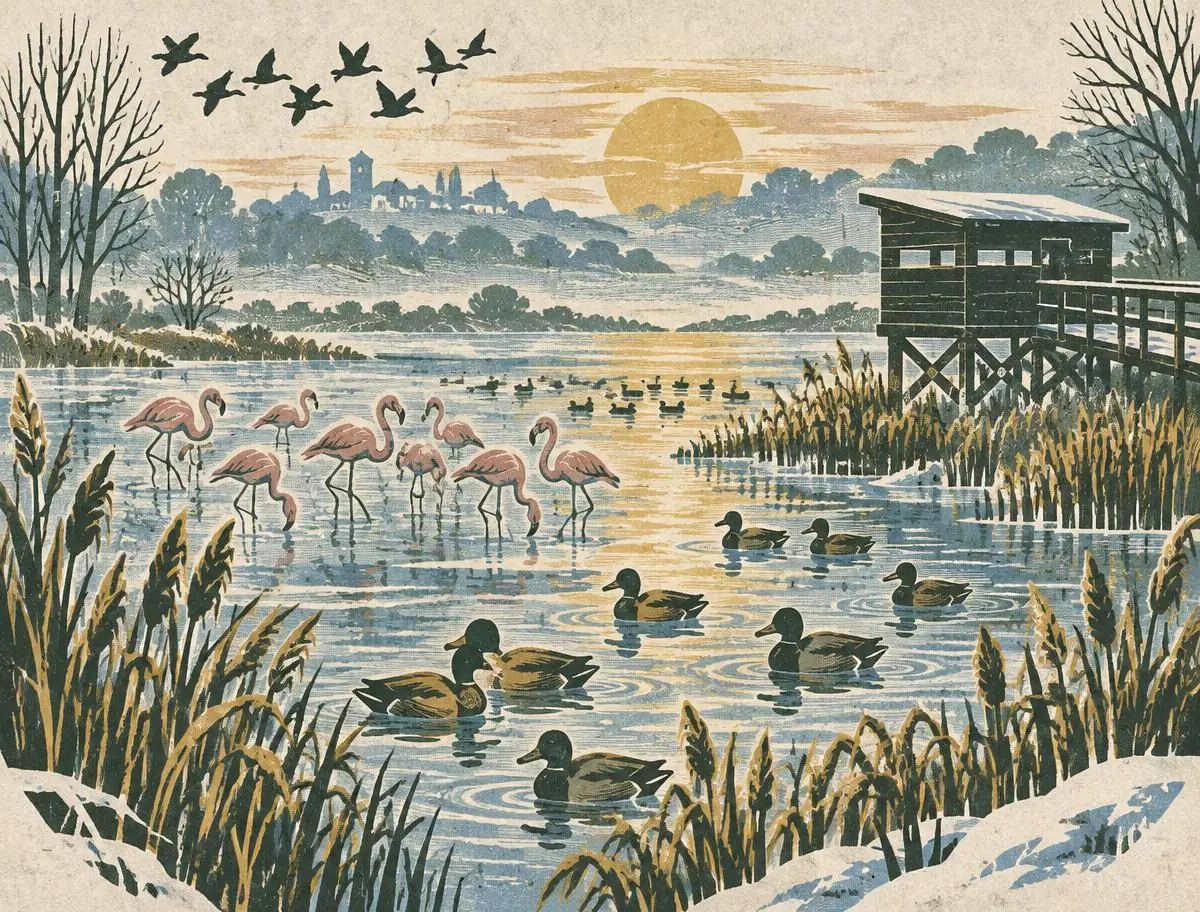
Because northern Europe freezes and the south doesn't. Thousands of ducks, waders, geese, herons and gulls come down to winter on Iberian wetlands, where the water stays open and food is available. What's a quiet lagoon in summer can be a city in January.
On top of that, birds in winter are concentrated and predictable. They need to save energy, so they spend hours in the same spots: roosts, feeding grounds and resting areas. That turns the patient watcher into the lucky one.
There's a trade-off: plumages are duller. Many ducks, waders and passerines are in drab winter plumage, so it pays to look at shape, size and behaviour before colour.
What time should you arrive?
Before full daylight. The first half hour is when birds leave their roosts: flocks on the move, geese heading out to the fields, herons switching perches. Arrive at eleven and you'll see the same species dozing far away.
Dusk is the other good window, especially for birds returning to roost. On foggy days, wait: once the fog lifts, there's usually a concentrated twenty minutes of activity that makes the wait worthwhile.
Avoid midday with strong sun and glare off the water. Flat light washes out detail, and heat haze distorts the image at long range, especially through a scope.
What order should you scan in to miss nothing?
First scan with the naked eye: shapes, movement, large silhouettes. Then work through with binoculars in bands: near shore, mid water, island or spit, far edge, and finally the sky. Repeat the cycle every few minutes, because the wetland is always changing.
Sort into groups before you attempt species. Diving ducks versus dabbling ducks; short-billed waders versus long-billed; herons by size and colour. A pochard is told apart from a mallard by how it dives and how it sits on the water, not by a plumage detail.
Count in blocks of ten. Nobody counts 800 ducks one by one: you count a group of ten, work out how many times it fits into the flock, and record it as an estimate. That's more honest and more useful than a made-up figure.
What mistakes flush half the wetland?
Leaning over the top of the hide for a better view. That very natural instinct puts a human silhouette on the skyline and empties the shore in seconds. Look through the slots, even if it feels awkward.
Walking along the open shore to "get a better shot". Waders spend hours feeding to build reserves for the night; every flight they're forced into costs energy they genuinely need.
Talking loudly on arrival and slamming the car door. In small wetlands, the car park is fifty metres from the water. Close the door gently and keep your voice down, and you'll start the morning with the birds still where they were.
How do you stay still for two hours in the cold?
By layering up and accepting that standing still gets you far colder than walking. Thin gloves that still let you turn the focus wheel, a hat, and an outer layer that doesn't rustle when you move — fabric noise is the biggest giveaway in a hide.
Here the criteria for clothing matter more than the brand: dense, matte fabrics, with no swish and no shine, in muted tones. A small flask and some food stretch out a session more than any optical accessory.
Bring a folding seat or a mat if you're staying a while. Discomfort is the number one reason people leave right before something interesting turns up.
Quick checklist before you go
- Head out with first light, not mid-morning.
- Close the car doors gently and keep your voice down.
- Scan by band: shore, water, island, sky.
- Count in blocks of ten, recorded as an estimate.
- Warm, quiet layers, thin gloves.
- A flask, some food, and a mat or seat.
Frequently asked questions
Do I need a scope for a wetland?
It helps a lot on large expanses of water, but a good 8x42 and a well-placed hide already give you a full day out.
What if the wetland is dry?
Look for the spot where water remains: in drought, birds concentrate even more. Check the site's official website beforehand for its current state.
Can you go with children?
Yes, with short sessions and a concrete goal: count the herons, find the duck with the green head, listen for the first flock. That works better than asking for two hours of silence.
Go back to the same spot
A wetland visited five times in one winter teaches you more than five wetlands visited once. You start recognising where each group roosts and noticing new arrivals.
If you're going to stand still for a long time in January, look for dense, matte clothing that stays quiet when you move.
See field clothing