Field Notes · Ethics
The photo isn't worth more than the bird
There's one rule and it allows no nuance: if the bird changes what it was doing because of you, you're too close. It doesn't need to fly off. It stops feeding, stretches up, stares at you, calls in alarm or moves away: all of those signals come before flight and already count as disturbance.
The good news is the most interesting photos almost never come from getting closer. They come from waiting in the right spot and letting the bird decide the distance.
One rule
If its behaviour changes, back off
Alarm, alertness, interrupted feeding or repeated moving away. Four signals that all mean the same thing: step back.
How do I know I'm disturbing it?
Watch the body, not the face. A relaxed bird feeds, preens, rests with one leg tucked up, or sleeps with its bill under its wing. An uneasy bird stands tall, stretches its neck, turns its body towards you and stops whatever it was doing.
Also listen for alarm calls: repeated, dry, insistent notes. They're obvious in waders and gulls. If they start when you arrive and stop when you back off, you have your measured answer.
With perched birds, count how many times they move. One shift might be coincidence. Three in a row away from you are not. Every forced flight is spent energy that matters a great deal in winter or during migration.
How do I approach without forcing the scene?
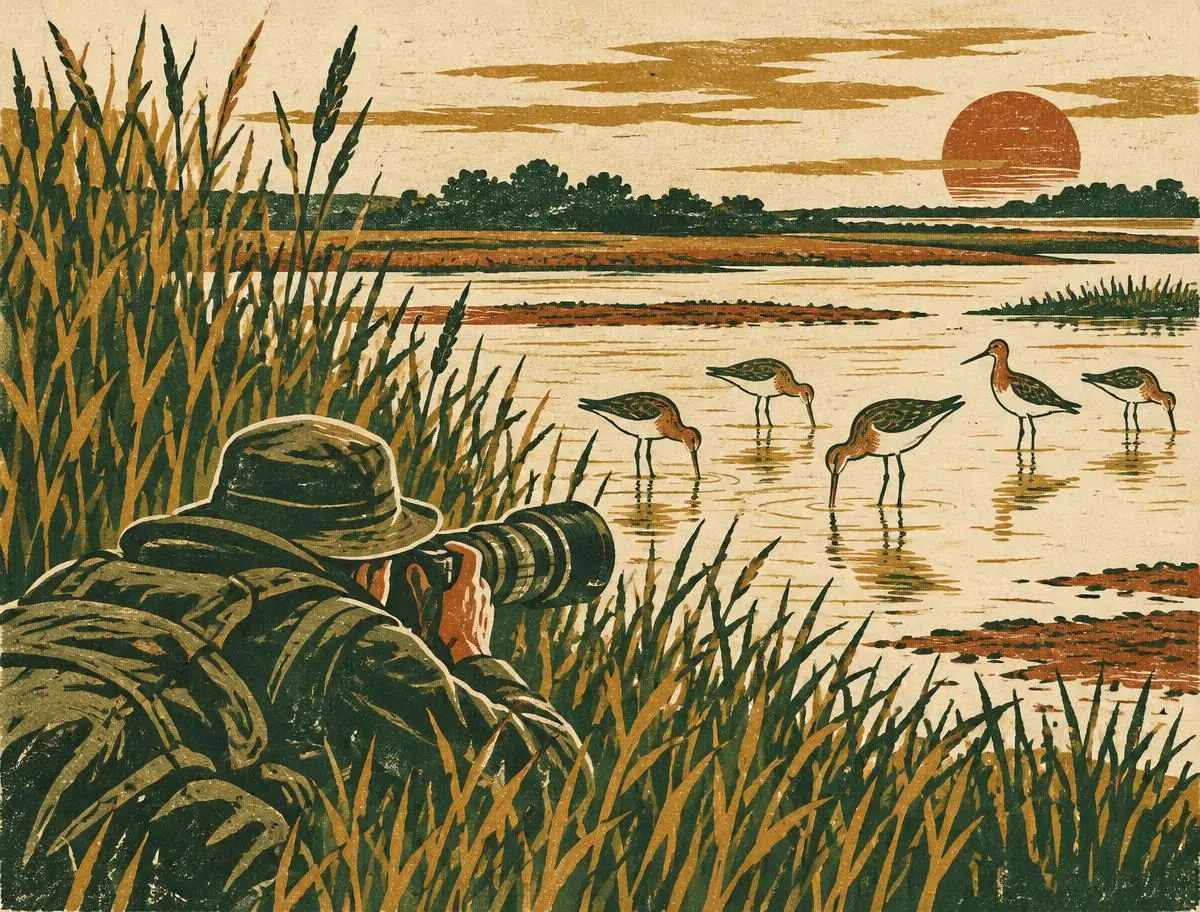
Don't approach: position yourself. Choose the place the bird is already going to be — a feeding shoreline, a perch, a water source — and wait there before it arrives. That's the difference between chasing and being accepted.
Work low. Lying down or sitting, your silhouette breaks up, the perspective improves and the bird sees you as less threatening. Use vegetation, a wall, the car or a hide: the car is one of the best hides there is in marshland and steppe.
Move in long stretches of time: take one step, wait, watch the reaction. Never move straight towards the bird. And don't use drones over birds: they cause mass flight and are outright banned in many protected areas.
What should never be photographed?
Nests, chicks and breeding colonies. Photographing a nest means pushing aside vegetation, leaving a trail, opening paths for predators and disrupting feeding visits. With many protected species there are also clear legal implications: check your region's wildlife regulations and don't approach without authorisation.
Nor should you photograph birds in distress for a dramatic shot, or birds baited with live prey, or night roosts with flash. And don't trim branches to "clean up" the background: that clearing can leave a nest exposed for weeks.
Avoid close flash, especially with owls and in low light. If your photo needs to alter the bird's behaviour to exist, the right answer is not to take it.
Can I use calls or food to attract birds?
Playing back songs to attract birds is a discouraged practice, especially during breeding season and with scarce species: it puts a nonexistent rival in their territory and burns energy and time the bird needs for other things.
As for bait, the line is drawn at impact. A clean water dish in summer or a well-kept winter feeder are accepted tools if hygiene and consistency are maintained. Baiting with meat to attract raptors or using live prey never is.
If you come across a set-up like that, don't share it or tag its location. Visibility is the fuel behind these practices.
How do I publish without causing harm?
Think about location first. Publishing exact coordinates of a nest, a delicate roost or a rarity can trigger dozens of visits within days. Give a broad reference, such as the region, and share the detail only with those who have study or conservation reasons.
Explain how the photo was taken. Noting that you were in a hide, at a distance, with a telephoto lens or from the car teaches far more than any lecture, and eases the pressure on beginners who assume they need to get close.
And be honest about cropping and editing: there's nothing wrong with saying an image is heavily cropped. A cropped photo beats an empty shoreline.
Quick checklist before you go
- Watch behaviour for a minute before shooting.
- Position yourself where the bird will already be; don't follow it.
- Work low and use cover, the car or a hide.
- No nests, chicks, colonies or drones.
- No recorded calls to attract birds.
- Sensitive locations, never made public.
Frequently asked questions
What's the minimum safe distance?
There's no universal figure: it depends on species, season and place. The bird's behaviour is the real measure.
Can I go off the trail to get a better background?
Not in protected areas, and as a general rule not outside them either: you trample habitat and open paths others will follow.
Where can I check the rules?
In the official information for the natural area and your region's wildlife regulations. Ethical guidelines from bird conservation organisations are a good starting point.
Patience is the best optic
The images you'll remember aren't the closest ones, but the ones that tell you something: a behaviour, a light, a moment in migration.
If you really want to improve, spend a whole outing watching without a camera. It shows on the next one.
Back to Field Notes